Best Wood Deck Primers for Lasting Outdoor Finishes
Choosing the right primer is essential for decks exposed to sun, rain, and foot traffic. A quality wood deck primer improves adhesion, seals porous surfaces, and extends the life of topcoats. The following five primers are chosen for their compatibility with exterior wood, ease of application, and strong adhesion. This guide covers how they perform on decks, fences, docks, and furniture, helping you decide which suits your project best.
| Product | Best Use | Key Benefit |
|---|---|---|
| Rust-Oleum Deck Start Wood Primer | Weathered exterior wood | Eliminates sanding, strong grip |
| TotalBoat Marine Topside Boat Paint Primer | Fiberglass and wood topside | High solids, one-coat seal |
| Liquid Rubber Multi-Purpose Primer (Gallon) | Wood and concrete | High-adhesion bonding |
| Liquid Rubber Multi-Purpose Primer (Quart) | Wood and similar substrates | Fast drying, versatile |
| BEEST Multi-Purpose Primer — Gray | Concrete, wood, decks | Ultra-low odor, strong adhesion |
Rust-Oleum Deck Start Wood Primer

Rust-Oleum Deck Start Wood Primer is designed for exterior wood surfaces that show weathering or previous coatings. It creates a strong base for solid stains, paints, and topcoats, reducing the need to sand away old coatings. The product features adhesion chemistry that helps the new coating grip the old surface, improving durability over time. It dries to touch in about an hour and covers up to 450 square feet in a single coat, making it suitable for large decks. After applying this primer, you can apply a solid color topcoat after 1–2 hours of dry time. It works well on decks, fences, docks, and outdoor furniture.
Key considerations: Ideal when you skip heavy sanding and want a quick, robust bond. Temperature and humidity affect drying times, so plan for a dry day. If you have areas with severe weathering or old coatings, a second coat may enhance build before applying topcoat.
TotalBoat Marine Topside Primer for Fiberglass and Wood (White)
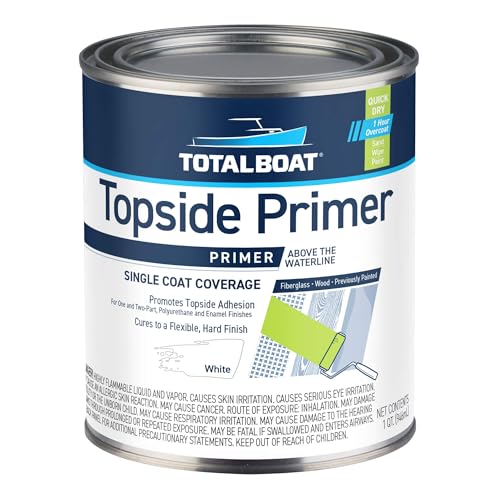
This one-part marine primer provides a durable, flexible undercoat for polyurethane and enamel marine topside paints. It’s suitable above the waterline on fiberglass, wood, gelcoat, and surfaces in good condition. The primer is designed to seal the surface in one thin coat, with a second coat only if higher build is needed. It can be applied by brushing, rolling, or spraying, giving versatility for different deck configurations. For larger imperfections, TotalBoat recommends using their epoxy fairing compound before priming. The formula is chromate-free and lead-free, addressing environmental and safety concerns for marine and outdoor projects.
Practical notes: This primer emphasizes ease of application and compatibility with multiple topcoats. While intended for marine use, it performs well on exterior wood decks and wooden structures that require a dependable base for topcoats while resisting weather impact.
Liquid Rubber Multi-Purpose Primer (Gallon)

The Liquid Rubber Multi-Purpose Primer functions as a high-performance bonding agent, improving adhesion and helping prevent blistering on a variety of substrates, including wood and concrete. It’s suitable for numerous surfaces and is fast-drying. Applications can be brushed, rolled, or sprayed, and typically 1–2 coats are enough, with top coating within 24 hours after the surface reaches tack-free. The primer is designed to reduce the amount of topcoat needed, offering potential cost benefits over time. It’s particularly useful for decks, where consistent adhesion across uneven wood grain can be challenging.
Considerations: Work in a well-ventilated area and follow personal protective equipment recommendations. While versatile, ensure the substrate is clean and dry before applying to maximize bonding performance.
Liquid Rubber Multi-Purpose Primer (Quart)

This quart-sized version mirrors the gallon with quick-dry properties and broad substrate compatibility, making it a practical choice for smaller deck projects or touch-ups. It supports wood and concrete surfaces and shares the same application methods as the gallon version. For larger decks, the gallon size offers better coverage economics, but the quart is excellent for MDF, trim, and smaller sections where a uniform primer layer is essential before painting or sealing.
Key points: If you’re price-conscious or working on a smaller area, this option provides the same adhesion benefits with less product per purchase. Ensure you apply 1–2 coats as needed and plan topcoat timing to maintain film integrity.
BEEST Multi-Purpose Primer — Gray

BEEST Multipurpose Primer is designed to significantly improve adhesion across a wide range of surfaces, including wood, concrete, decks, basements, planters, and RV roofs. It helps prevent blistering and peeling by boosting bonding strength. The product emphasizes environmentally friendly use, ultra-low odor, and easy application, going on like water and drying quickly. It’s particularly suitable for deck coatings, where long-lasting results depend on robust substrate prep. It’s compatible with BEEST liquid rubber coatings and sealants for comprehensive protection.
Purchase considerations: BEEST’s primer stands out for low odor and user safety, which is advantageous for indoor/outdoor setups adjacent to living spaces. The primer’s versatility makes it a good base for various topcoats, but always verify compatibility with your chosen topcoat to maximize performance on exterior wooden decks.
Buying Guide: Wood Deck Primer Considerations
- Substrate compatibility: Choose a primer designed for exterior wood and weathered surfaces to maximize adhesion and reduce prep work.
- Drying time and weather: Consider drying times and humidity. Some primers dry quickly, enabling faster topcoat applications, while others tolerate longer exposures to dew or rain.
- Topcoat compatibility: Ensure the primer is compatible with your intended topcoat (stain, paint, or sealant). Some primers are formulated specifically for marine or deck coatings, which can influence performance.
- Coverage: Compare coverage per gallon or quart to estimate project scope and potential cost. Larger decks benefit from primers with higher coverage per coat.
- Safety and environmental impact: Look for low-odor, non-toxic, and lead-free formulations when possible, especially for residential decks near living spaces.
- Application method: Brushing, rolling, and spraying compatibility provides flexibility for different deck configurations. Follow prep steps, including cleaning and allowing surface to dry fully.
- Repair and fill needs: For large surface imperfections, plan a reinforcing step with a filler or fairing compound before priming to achieve a smooth topcoat finish.
- Long-term durability: A primer with strong adhesion and sealant-friendly properties will extend the life of the topcoat against sun, moisture, and wear.
In choosing a wood deck primer, balance substrate preparation with topcoat goals. For weathered or previously coated wood, primers like Rust-Oleum Deck Start Wood Primer offer rapid bonding and easier prep. If you’re seeking versatility across substrates and fast build, Liquid Rubber and BEEST primers provide robust adhesion with user-friendly application. For marine-appropriate projects or decks near water, TotalBoat Topside Primer offers a reliable one-coat seal for woody substrates. Always follow label directions and test a small area before full-scale application to ensure compatibility with your specific deck conditions.