Best Off Grid Air Conditioners for Remote Living and Mobile Homes
Discover top off-grid cooling options designed for RVs, vans, trucks, and other mobile spaces. This guide highlights five reliable units that balance power, efficiency, and durability for off-grid living, boondocking, and remote adventures. Each product includes key features to help you compare performance, energy use, and installation needs.
| Product | Brand | BTU / Capacity | Type |
|---|---|---|---|
| RV Air Conditioner, 12V 10000 BTU Rooftop | outequip | 10,000 BTU | Rooftop A/C with 4,500 BTU heater |
| 12V RV Air Conditioner, White Quiet Rooftop | outequip | 10,000 BTU | Rooftop A/C with heater (non-ducted) |
| Furrion Chill Cube 18k BTU RV Rooftop | Furrion | 18,000 BTU | Non-ducted RV rooftop A/C |
| 24V RV Rooftop Air Conditioner 11k BTU | outequip | 11,000 BTU | 24V rooftop A/C (off-grid capable) |
| DC 12V RV Air Conditioner 12V 12k BTU | Jrswin | 12,000 BTU | DC 12V rooftop A/C |
Note: All products listed are suited for mobile living, offer off-grid compatibility, and are designed to operate in compact spaces. Consider your vehicle’s electrical system, battery capacity, and available solar setup when selecting a unit.
RV Air Conditioner With Built‑in Heater (10K BTU)

This 12V rooftop unit delivers efficient cooling for RVs, trucks, and small spaces. It cools quickly—up to 10,000 BTU capacity paired with a 4,500 BTU PTC heater for supplementary warmth. Designed for durability, it uses UV-stabilized ABS housing, EPDM foam gasket, and a zinc-coated condenser to withstand challenging weather. The combination helps provide reliable comfort during variable off-grid conditions, while remaining compact enough for rooftop installation in lightweight motorhomes.
12V RV Air Conditioner With Heater (Rooftop, 10K BTU)

Offering a fast cooling capability of up to 10,000 BTU, this white rooftop A/C is designed for off-grid setups in RVs, vans, and trailers. It includes a built-in 4,500 BTU PTC heater for safe supplementary warmth in milder seasons. An energy-efficient 12V DC inverter system adapts output to demand, minimizing battery drain and blending well with solar or battery banks for extended boondocking sessions. Ideal for users prioritizing quiet operation and dependable performance in compact spaces.
Furrion Chill Cube 18K RV Rooftop A/C

The Furrion Chill Cube offers higher cooling capacity with a 18,000 BTU unit designed for campervans and RVs. It uses variable speed compressors to move cooled air faster and with greater efficiency, helping extend battery life during off-grid use. The installation is straightforward, and the system is noted for its superior performance relative to many standard RV roof units. This makes it a strong option for larger off-grid setups needing robust cooling and energy efficiency.
24V RV Rooftop A/C (11K BTU, Off-Grid Ready)

This 24V rooftop unit delivers 11,000 BTU of cooling for campers and vans operating off-grid. It is engineered for direct vehicle battery use with compatibility for solar-powered setups. The housing uses UV-stabilized ABS and a zinc-coated condenser, aiding weather resistance and longevity in harsh outdoor environments. A solid option for off-grid travelers who need steady cooling with efficient energy usage and a compact footprint.
DC 12V RV Air Conditioner (12k BTU)
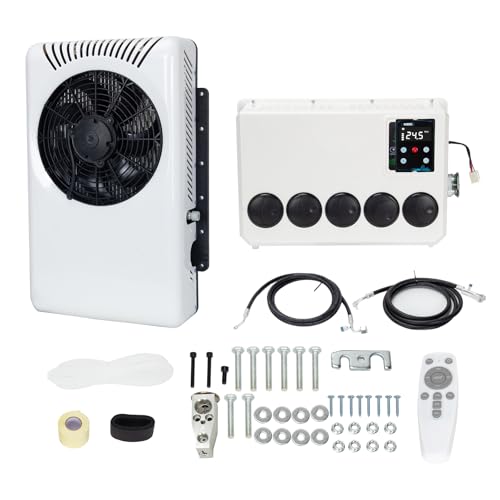
This 12V DC rooftop A/C delivers 12,000 BTU of cooling capacity tailored for motorhomes, vans, and trucks. It emphasizes quiet operation at about 45 dB, making it suitable for driving or parking with the engine off. It also includes multi-layer circuit protection to guard against surges and vibrations, contributing to long-term durability in mobile environments. A practical choice for drivers who require reliable off-grid cooling with minimal noise and robust safety features.
Buying Guide: Key Off-Grid A/C Purchase Considerations
When choosing an off-grid air conditioner, consider these factors to ensure reliable performance in remote settings:
- Power Source Compatibility: Many units run on 12V or 24V DC, making them ideal for solar setups and battery banks. Confirm your vehicle’s electrical system and available solar capacity to avoid underpowered cooling.
- BTU Rating and Space: Higher BTU ratings deliver faster cooling but consume more energy. Match BTU to your space size (footprint, insulation) and climate expectations to optimize efficiency.
- Heating Capability: Some A/Cs include a built-in PTC heater or heat pump. This is helpful for shoulder seasons but may not replace a primary heating system in very cold climates.
- Installation Type: Rooftop, windowless, or ducted configurations affect installation effort and compatibility with your vehicle’s roof structure and interior layout.
- Durability and Weather Resistance: Look for UV-stabilized housings, corrosion-resistant condensers, and gasket materials designed for outdoor exposure and vibrations typical of mobile use.
- Energy Efficiency: Inverter compressors and smart load management reduce battery draw. Consider models with adjustable speeds and eco modes to maximize runtime in off-grid scenarios.
- Noise Levels: Noise can impact comfort during travel and at night. Check decibel ratings and choose models designed for quiet operation when idling or at low fan speeds.
- Maintenance: Removable, washable filters and accessible components make routine upkeep easier. Favor designs with simple cleaning procedures and readily available replacement parts.
- Warranty and Support: A robust warranty and accessible customer service help protect your investment during long trips.
In off-grid decisions, balancing BTU, power draw, and space efficiency is essential. For larger RVs or longer boondocking stays, higher BTU units with inverter technology deliver comfort without draining batteries quickly. For smaller vans or tight spaces, 10,000 BTU rooftop models often provide ample cooling while preserving energy reserves. Always verify compatibility with your vehicle’s electrical system and any solar array or battery management strategies before purchasing.