Best White Roof Coatings for Energy Savings and Roof Protection
Choosing a white roof coating can reduce heat absorption, extend roof life, and lower cooling costs. This guide highlights top white elastomeric coatings available on Amazon, focusing on reflectivity, durability, and ease of application. Each product section provides a quick overview, key features, and practical considerations to help American homeowners and contractors pick the right option for flat, low-slope, or metal roofs.
| Product | Brand | Key Benefit | Approx. Coverage Reference |
|---|---|---|---|
| Rust-Oleum 710 Elastomeric Roof Coating | Rust-Oleum | High reflectivity with 80% reflectivity and 10-year warranty | 5 gal |
| Sta-kool SK-7805 Elastomeric Roof Coating | Gardner-Gibson | Siliconeized white with weather resistance | 5 gal |
| AMES MSS1 Maximum Stretch Roof Coating | AMES | 650% elongation; strong resistance to cracking | 1 gal |
| Sta-Kool 15-Year Turbo-Dri Elastomeric Roof Coating | Gardner | Rain-safe in 30 minutes; fast recoating | 5 gal |
| Liquid Rubber RV Roof Sealant | Liquid Rubber | Flexible, solar-reflective membrane for RV roofs | 1 gal |
Rust-Oleum 710 Elastomeric Roof Coating

Rust-Oleum’s 710 Elastomeric Roof Coating is a white, elastomeric sealant designed for flat and low-slope roofs. It provides a durable, waterproof seal within hours and boasts a long-term warranty. The coating’s cool roof technology reflects sunlight, helping reduce interior temperatures and energy costs. It adheres to most common roof substrates when properly prepared and applied in multiple coats as needed. Consider it for metal, modified bitumen, and single-pply roofs requiring a high-reflectivity finish.
Sta-kool SK-7805 Elastomeric Roof Coating
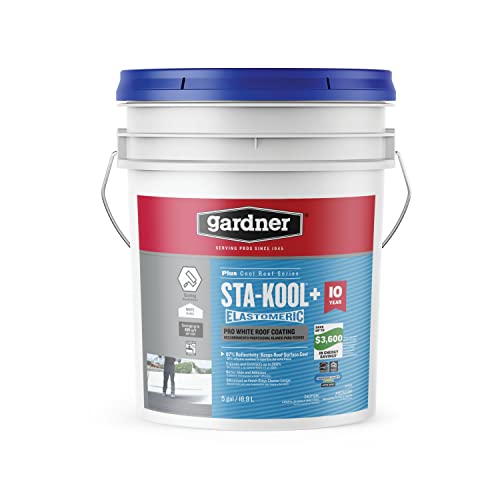
Gardner-Gibson’s Sta-kool SK-7805 is a white, siliconeized elastomeric coating designed for quick-drying protection. Marketed for compatibility with low-slope roofs, it emphasizes a clean, reflective finish that helps minimize heat gain. The 5-gallon container suits residential roofs and small commercial applications. For best results, ensure proper surface cleaning and cornice detailing prior to application, and follow recoat timing guidelines to maintain its reflective performance.
AMES MSS1 Maximum Stretch Roof Coating
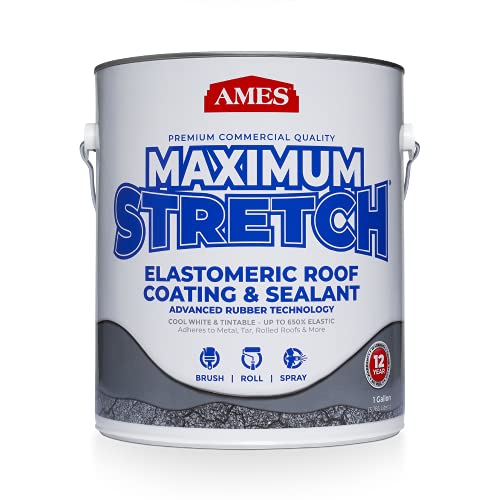
AMES MSS1 Maximum Stretch Roof Coating is an elastomeric acrylic sealant with substantial elongation (up to 650%). It resists cracking and peeling on aging or damaged substrates. With an 88% light reflectivity, the bright white finish lowers surface temperatures and cooling costs. The product adheres to metal, tar, and rolled roofs and can be brush, roll, or spray-applied. It’s positioned as a versatile option for low-slope roof maintenance and RV or trailer applications.
Sta-Kool 15-Year Turbo-Dri Elastomeric Roof Coating
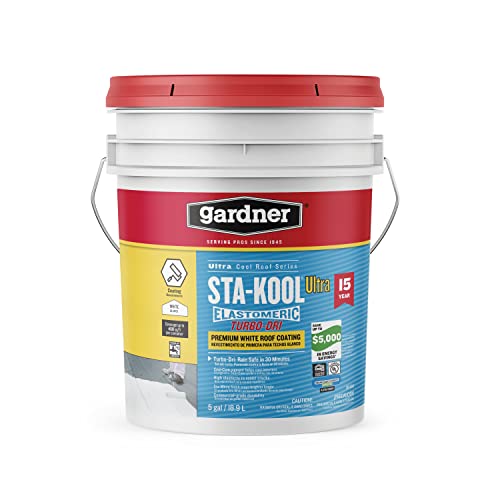
Gardner-Gibson Sta-Kool Turbo-Dri is a 15-year elastomeric coating designed to stay weather-tight. Its “cool-core” technology uses pigments to reflect heat, helping to maintain cooler interiors. The coating is described as “Rain Safe” in 30 minutes and allows recoating in about three hours, enabling faster project completion. The white finish is formulated to retain flexibility and resist UV damage over time, making it suitable for RVs and residential low-slope roofs alike. Surface prep and ventilation considerations are important for optimal results.
Liquid Rubber RV Roof Sealant

Liquid Rubber RV Roof Sealant provides a flexible waterproof membrane suitable for EPDM, TPO, fiberglass, and aluminum surfaces. It is designed for RV roofs and travel trailers, offering both solar reflectivity and durability. The product emphasizes compatibility with Liquid Rubber EPDM primers for enhanced adhesion and a durable, leak-proof finish. This option is particularly relevant for campers, trailers, and other mobile roof applications where expansion and contraction occur with temperature changes.
Buying Guide
Key considerations when selecting a white roof coating include roof type, climate, substrate compatibility, and maintenance expectations. Reflectivity and emissivity influence cooling performance, but the coating must also tolerate weather exposure and foot traffic or mechanical wear. Consider the following dimensions:
- Roof substrate compatibility: Metal, asphalt, tar, and EPDM/TPO require different adhesion properties. Read surface prep instructions carefully and use primers if recommended.
- Elastomeric durability: Higher elongation helps resist cracking on aging roofs. For roofs that move or flex, opt for elastic formulations with strong elongation.
- Drying and curing times: Some coatings are quick-drying, enabling faster re-coats, while others require longer cure times. Plan work windows accordingly, especially in humid or rainy seasons.
- Reflectivity and cooling: White coatings with high solar reflectivity can reduce indoor temperatures and cooling costs. Verify the claimed reflectivity and long-term performance.
- Waterproofing vs. sealant function: Some products act primarily as sealants, others form a flexible membrane. Choose based on whether you need leak prevention, crack bridging, or both.
- Warranty and guarantees: Longer warranties indicate confidence in durability, but verify coverage terms and installation requirements to ensure eligibility.
- Application method: Brushes, rollers, or spray applications each have pros and cons. Larger roofs benefit from spray equipment; smaller or detailed areas may use brush or roller.
- Maintenance and re-coating: Some coatings require re-coating in a set timeframe. Plan for regular inspections to maintain performance and reflectivity.
Overall, selecting a white roof coating involves balancing substrate compatibility, durability, and cooling benefits. For residential homes and light commercial projects, 5-gallon options are common, while 1-gallon cans serve smaller repairs or single-application tasks. Always follow manufacturer guidelines for surface preparation, priming (if needed), and application temperatures to maximize longevity.