Best Sediment Filter for Well Pump: Top Whole-House Spin Down Options
Answering the demand for cleaner well water, these sediment filters protect your pump and plumbing by capturing sand, rust, and debris before they reach your system. Best for buyers seeking simple installation, visible filtration, and easy maintenance. The top picks below are ideal for well-water systems, with options for different microns, sizes, and fittings to fit common home setups. Use this guide to compare practical benefits and select the right pre-filter for your home.
Buyer Snapshot Table
| Product | Best For | Key Benefit | Typical Fit |
|---|---|---|---|
| MewMore WHC40 Spin Down | Homes needing flexible micron options | 40/100/200 micron cartridges; clear housing | 1″ MNPT / 3/4″ FNPT / 3/4″ MNPT |
| Waterdrop Spin Down | Families seeking BPA-free housing | 50 micron filter; NSF/ANSI 372 | 1″ MNPT + 3/4″ FNPT + 3/4″ MNPT |
| Turboyhood 50 Micron Spin Down | Budget-friendly, durable option | 50 micron; reusable flush capability | Standard pipe sizes |
| H2O PRO Spindown | Clear housing for quick inspection | 40-50 micron with visible sediment | 1″ and 3/4″ fittings |
| doufuhua 1-1/2″ 100 Mesh | Higher-flow, larger-diameter setups | 100 mesh replacement screens | 1-1/2″ connections |
MewMore WHC40 Sediment Filter (40/100/200 Micron)

Best for households wanting adjustable filtration on a single unit. The MewMore WHC40 includes 40, 100, and 200 micron cartridges, enabling customization based on incoming water quality. The brass valve head and clear housing help monitor performance and protect downstream equipment.
- Best for users who anticipate changing sediment levels or wanting reusable filtration with adjustable micron options.
- Clear, BPA-free housing simplifies visual checks and maintenance planning.
Best for: families needing a flexible pre-filter that adapts to varying well-water sediments. Caution: check compatibility with existing piping and adapters to ensure proper fit across all connections.
H2O PRO Spindown Sediment Filter

Better for clear monitoring: the H2O PRO model emphasizes a transparent body and a 1″ and 3/4″ connection scheme. The 40-50 micron range targets rust and sand, helping protect filter housings and appliances from sediment buildup.
- Best for buyers who want straightforward, visible filtration and simple upkeep.
- Choose this if you prefer a compact unit with easy flush and visual inspection.
Best for: households prioritizing visibility of sediment and ease of flushing. Limitation: include compatible adapters for full flow compatibility with your piping.
doufuhua 1-1/2″ 100 Mesh Spin Down Filter
Best for larger-diameter well systems requiring higher flow. This replacement screen option provides 100-mesh filtration for 1-1/2″ lines, ideal for installations with Rusco or similar flow-through filters. The PP and food-grade materials resist chemical exposure and wear.
- Best for: larger households or irrigation setups needing robust replacement screens.
- Limitations: requires compatible 1-1/2″ fittings and may not suit smaller PEX setups.
Waterdrop Spin Down Sediment Filter

Best for households seeking a clean, modern design with safety certifications. Waterdrop’s model traps sediment with a 50-micron 316L filter, featuring NSF/ANSI 372 compliance and BPA-free housing. Its blue-coated fittings add corrosion resistance, helping guard against metal leaching.
- Best for: families prioritizing safe materials and lead-free construction.
- Note: the included filter granularity is around 50 microns, which may suit moderately dirty water better than ultra-fine needs.
Turboyhood 50 Micron Spin Down
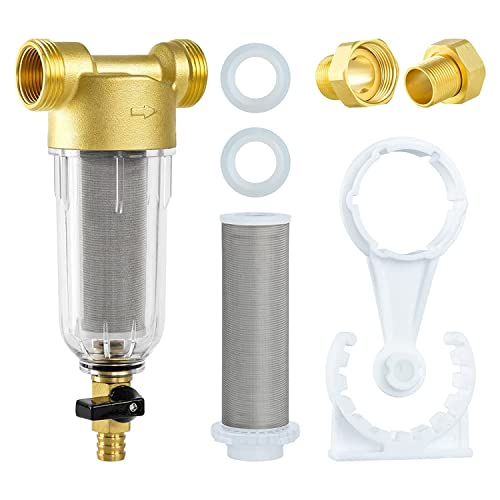
Best for robust, reusable pre-filters. The Turboyhood unit captures sediment at 50 microns and is designed for easy flushing to restore flow. The BPA-free construction and NSF/SGS-certified materials support safe, long-term use in well-water systems.
- Best for: households needing a durable, low-maintenance pre-filter.
- Limitation: 50 micron filtration may require more frequent flushing in highly sediment-rich water.
Buying Guide: Sediment Filters For Well Pumps
What size and micron rating should I choose?
Micron ratings indicate the size of particles captured. For well water with visible sediment, 40-100 microns are common. If water appears clearer, a 50-100 micron option can balance sediment removal with longer filter life. For high-sediment wells, consider 40 microns, but be prepared for more frequent maintenance.
Should I prefer a clear housing?
Clear housings help you visually gauge when to flush or replace filters. They are useful for homes where sediment levels fluctuate seasonally or with irrigation cycles.
Are the materials safe for drinking water?
- Look for BPA-free housings and lead-free fittings.
- NSF/ANSI certifications (when stated) indicate adherence to safety standards.
What installation considerations matter?
Check pipe sizes (1″ vs 1-1/2″) and the availability of adapters for your existing plumbing. If your system uses multiple junctions, a model with adaptable fittings helps avoid custom plumbing work.
How does a spin-down filter differ from cartridge filters?
Spin-down filters use screen or mesh elements to capture sediments and are easier to flush and reuse. Cartridge filters catch finer particles but typically require more frequent replacements and housings designed for long-term maintenance.
What maintenance should I expect?
Regular flushing or replacement based on sediment load is essential. Flush frequency depends on water quality, well usage, and the filter’s micron rating. Keeping a simple maintenance schedule helps protect pumps and appliances.
How to compare options quickly?
- Compare micron ratings, flow compatibility, and whether the housing is BPA-free and lead-free.
- Consider whether you need a visible filter (clear housing) or a tougher, reusable unit for heavy sediment.
Common installation tips
- Use appropriate adapters for 1″ or 1-1/2″ pipe size to avoid leaks.
- Place the filter upstream of other filters to extend their life and reduce maintenance costs.
- Keep spare replacement screens or cartridges on hand for quick changes.
FAQ
- What is a spin-down sediment filter? A spin-down filter uses a screen or mesh element to capture sediment and can be flushed and reused, reducing ongoing filter waste.
- How often should I flush a spin-down filter? Flushing frequency depends on sediment levels and water usage; do it when you notice reduced flow or visible buildup in the clear housing.
- Can these filters remove iron or rust? They primarily trap sand, rust, and debris; for iron, you may need specialized iron filtration or treatment stages.
- Are these filters safe for drinking water? Many options use BPA-free housings and lead-free fittings; check the product’s certifications and materials to confirm.
- Will a larger-diameter filter affect water pressure? Higher-flow units can support greater flow, but improper installation or overly restrictive micron selections may impact pressure.
- Do I need adapters for my plumbing? Yes, ensure you select a model with compatible fittings or have adapters available to fit your pipe size.