Best Professional Orbital Sanders for Precision Finishing and Long-Lasting Power
For woodworking pros, achieving a smooth finish quickly without overheating the workpiece or dragging on sanding dust is essential. The following picks represent top options across brushless power, variable speed control, dust management, and ergonomic design. Each model is suitable for professional shops and demanding DIY projects, offering reliable performance, diverse grip styles, and compatibility with standard 5″ and 6″ sanding discs. Use this guide to compare core features and choose the right sander for your workload and budget.
| Product | Brand | Key Feature |
|---|---|---|
| KUIMIT Pro-Grade Random Orbital Sander | KUIMIT | Brushless motor; 5″ & 6″ discs; dust management |
| DEWALT DWE6423 Random Orbit Sander | DEWALT | 8,000–12,000 OPM; reduced vibration |
| Makita BO5041 Random Orbit Sander | Makita | 4,000–12,000 OPM; ergonomic grip |
| DEWALT DCW210D1 Cordless Orbit Sander | DEWALT | Brushless motor; 8,000–12,000 OPM; cordless |
| BOSCH GET75-6N Electric Orbital Sander | BOSCH | Dual-mode; Turbo option; multi-hole pad |
KUIMIT Pro-Grade Random Orbital Sander

The KUIMIT sander centers on a brushless motor designed for longevity and consistent performance. The tool ships with both 5″ and 6″ sanding pads, enabling quick transitions between detailed work and broader surface coverage. A key selling point is the ability to swap pads in seconds, reducing downtime on larger projects. The dust management system includes a vacuum hookup and a dust tunnel that helps keep the work area cleaner, while jumbo vents help prevent overheating during extended sessions.
DEWALT Random Orbit Sander, 5-Inch (DWE6423)

DEWALT’s DWE6423 features a 3-amp motor that drives the pad at 8,000 to 12,000 OPM with a focus on reduced vibration via a separate counterweight. The dust-sealed switch protects against debris ingress, extending switch life in workshop environments. The compact form factor and low-profile design help achieve precise sanding along edges and contours, making it a solid choice for finishing work in professional settings.
Makita BO5041 5″ Random Orbit Sander

Makita’s BO5041 emphasizes comfort and control with an ergonomic rubberized grip. It delivers 4,000–12,000 OPM via a 3.0-amp motor, enabling users to tailor speed to the application. The variable-speed dial helps maintain consistent material finish across various wood densities, while the overall balance reduces user fatigue during long sessions. This model is well-suited for professionals who prioritize a precise, smooth finish on furniture components or cabinetry.
DEWALT DCW210D1 20V MAX Orbital Sander

This cordless DEWALT model combines a brushless motor with a versatile 8,000–12,000 OPM range, offering freedom of movement on job sites without dragging a power cord. The included battery and charger provide immediate portability for quick touch-ups or areas without accessible outlets. Its low-profile height supports close-to-workpiece accuracy, and the tool is well-suited for shop-to-site transitions and smaller finishing tasks.
BOSCH GET75-6N Electric Orbital Sander
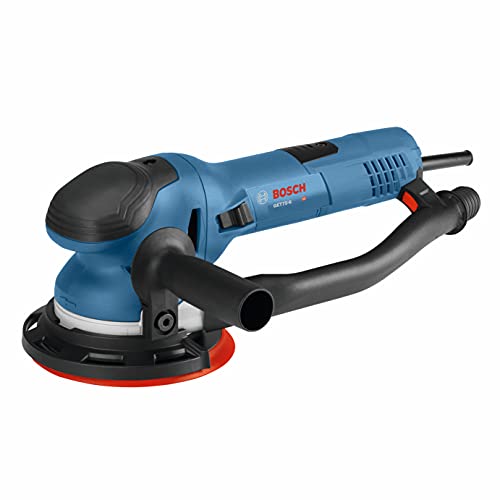
BOSCH GET75-6N offers a multi-hole pad system for broader dust management options and dual-mode sanding, including a turbo option for aggressive material removal. The turbo mode provides higher stock removal, making it suitable for surface prep prior to finishing. This model balances versatility with a more robust construction, appealing to professionals who work on a range of materials and finish expectations.
Buying Guide: Key Purchase Considerations
When choosing a professional orbital sander, consider power source, speed range, and dust management. Brushless motors typically offer longer life and smoother operation under load, but may come at a higher upfront cost. Variable speed helps tailor aggression to the material and finish quality, reducing the risk of gouging or swirl marks. For shop cleanliness, look for efficient dust collection—whether via vacuum hookup, integrated bags, or cyclone dust boxes—and a design that minimizes clogging in vents and filters.
Pad size and compatibility influence finishing coverage and edge reach. 5″ discs excel at detail work and cabinetry, while 6″ discs cover larger surfaces quickly. Dual-mode options or turbo settings can boost stock removal on rough prep, but may require careful control for fine finishes. Ergonomics matter in long sessions; a comfortable grip and balanced weight reduce operator fatigue and improve accuracy. Cordless models add mobility, but ensure battery life aligns with job length. Finally, verify reliability from brands with solid service networks and readily available replacement pads and parts.
In evaluating the five featured models, pros should weigh motor type (brushless vs brushed), speed range, and dust handling in light of typical project profiles—cabinetry, furniture finishing, flooring prep, and auto body work. For dedicated shop environments, corded options often sustain peak performance longer, while cordless models shine on-site or in portable workshops. By aligning these factors with your workflow, you can select a professional orbital sander that consistently delivers smooth finishes with minimal rework.