Best Professional Tile Saw for Precision Cutting and Tough Jobs
Choosing the right professional tile saw can dramatically improve accuracy, reduce cleanup time, and speed up installation projects. This guide highlights five top performers, comparing cutting power, capacity, durability, and water management to help pros pick the best tool for ceramic, porcelain, and stone tiles. Each entry includes key features and practical use notes to aid decision making.
| Product | Brand | Key Features |
|---|---|---|
| DEWALT Wet Tile Saw with Stand, 10 Inch (D36000S) | DEWALT | 1,220 MWO; 37 in. rip capacity; 1/32 in. accuracy over 30 in.; 18 in. left clearance |
| SKIL 7-Inch Wet Tile Saw – 3540-02 | Skil | Stainless top; 12 x 12 tile support; adjustable rip fence; blade cooling reservoir |
| Skil 3550-02 7-Inch Wet Tile Saw with HydroLock | Skil | HydroLock water containment; 18 x 18 in. tile support; rust-resistant aluminum table |
| DEWALT Wet Tile Saw with Stand, 10-Inch (D24000S) | DEWALT | 24″ ripping with cantilever rail; 69 lb transport; stainless rail for accuracy |
| PORTER-CABLE Tile Saw, Wet Saw with 7-Inch Capacity (PCE980) | PORTER-CABLE | Onboard miter square; roll cage; splash guard |
DEWALT Wet Tile Saw with Stand, 10 Inch, 15-Amp, 1,220 MWO

The DEWALT D36000S combines solid power with a rigid frame and stainless-steel rollers to deliver high-precision cuts. With a 15-amp motor generating up to 1,220 MWO, this saw supports demanding tile installations. A long rip capacity and extensive left-clearance enable efficient crosscuts and sheet tile work. The cantilevered stand improves stability on job sites, while the cutline indicator helps verify alignment before each pass. This model is well-suited for large-format tile and thick porcelains, where repeatable accuracy matters.
SKIL 7-Inch Wet Tile Saw – 3540-02

SKIL’s 3540-02 is a compact, versatile option designed for precise small-to-medium tile work. The corrosive-resistant stainless steel top supports up to 12 x 12 inches, while the adjustable rip fence and miter gauge help ensure straight and angle cuts. An integrated blade cooling water reservoir minimizes dust and debris, preserving visibility and blade life during extended cuts. This model is ideal for bathroom projects and kitchen backsplashes where space is at a premium.
Skil 3550-02 7-Inch Wet Tile Saw with HydroLock
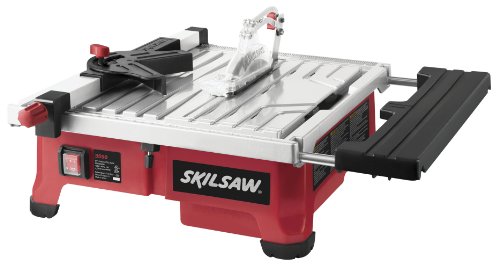
The Skil 3550-02 features HydroLock water containment to keep moisture near the blade and reduce cleanup time. A sliding side extension supports up to 18 x 18-inch tiles, while an aluminum table top provides a durable, rust-resistant surface. This saw is well-suited for mid-size projects and installations requiring reliable, repeatable cuts with reduced splash and mess.
DEWALT Wet Tile Saw with Stand, 10-Inch, Corded (D24000S)

The DEWALT D24000S emphasizes portability and accuracy with a cantilevering rail/cart system offering a 24″ ripping capacity and an 18″ diagonal cut capability. At about 69 pounds, it’s feasible for a single operator to transport and set up, while the stainless steel rail system is integrated for repeatable, precise cuts. The combination of power and mobility makes it suitable for professional tile crews handling mid-to-large scale jobs on varied surfaces.
DEWALT Wet Tile Saw, Masonry, 4-3/8-Inch (DWC860W)

This DEWALT masonry tile saw is built around a compact 4-3/8″ diamond blade, designed for smaller, precise cuts in ceramic and mosaic tile. The 10.8 amp motor delivers reliable cutting through softer masonry materials, and at a lighter weight, it’s easy to maneuver around tight installation sites. It’s a strong choice for small bathroom renovations and detailed edges where convenience matters.
PORTER-CABLE Tile Saw, Wet Saw with 7-Inch Capacity (PCE980)

The PCE980 offers onboard miter square for repeatable cuts and a roll cage for protected transport of the cutting cart. A splash guard helps keep water away from the operator, making it a practical choice for busy crews needing dependable performance without excessive cleanup between jobs.
Buying Guide: Key Purchase Considerations
- Cutting Capacity and Tile Type: Larger formats (up to 36 in. and beyond) are essential for floor-to-ceiling installations, while 7–10 inch blades suit most bathroom and kitchen projects. Consider porcelain, ceramic, and natural stone compatibility when selecting a blade and water management features.
- Power and Torque: Look for a robust motor (at least 1,200–1,500 watts) for dense porcelain or granite. Higher horsepower supports deeper cutting depths and faster feed rates, reducing heat buildup and blade wear.
- Water Management: Efficient water containment reduces dust and debris. HydroLock or integrated reservoirs simplify cleanup and improve visibility during cuts, especially in enclosed spaces or long runs.
- Portability vs. Stability: If you work on multiple sites, a saw with a balanced weight and a stable stand is ideal. Cantilever rails or rails integrated into the frame enhance cutting accuracy on uneven floors.
- Accuracy Features: Cutline indicators, adjustable fences, and miter gauges help ensure repeatable results across jobs. Precision is critical when installing patterns or intricate tile layouts.
- Durability and Materials: Stainless steel components, rust-resistant tables, and solid frames extend tool life in professional environments. Look for rugged construction and reliable blade cooling systems.
- Maintenance and Clean-Up: Easy blade changes, accessible water reservoirs, and simple debris management save time on the job site. Consider tools with removable reservoirs and straightforward cleaning procedures.
Considerations by Project Type
- Residential bathrooms and kitchens: Prioritize compact models with good water containment, a stable stand, and straightforward setup for quick turnovers.
- Commercial installations: Choose larger-capacity saws with longer ripping capabilities, robust rails, and wheels for frequent relocation on bigger sites.
- Stone and porcelain: Seek higher-power motors, deeper cutting depths, and quality blades designed for dense materials to minimize chipping and ensure clean edges.
- Portability vs. performance: If you need to carry the tool between sites, weigh the benefits of lighter models with reasonable cutting power against heavier industrial-grade machines.
Across these options, the best professional tile saw should balance cutting capacity, motor power, water containment, and portability to fit your typical projects. The listed models offer a spectrum of capabilities, from compact, everyday-use machines to heavy-duty units suitable for larger commercial renovations. By aligning your choice with tile type, project size, and crew workflow, you can optimize both efficiency and installation quality.