Best Air Filter for Cat Litter: Top Picks for Fresh, Odor-Free Homes
Answer: For cat-litter odors, choose a combination of an effective room air purifier and targeted litter-odor devices. The best options below cover large-room purification, odor removal at the source, and silent operation for daily use. Pick according to your space, pet population, and tolerance for maintenance. The following selections are well-suited for typical homes with one to two cats and litter box challenges.
| Product | Best For | Notes |
|---|---|---|
| HEAPETS P358 | Large rooms up to 2500 ft² | Dual intake, PET-focused filtration |
| Ladnut Cat Odor Remover | Automatic litter-box odor control | Ozone + negative ions with smart sensor |
| uahpet Nano Deodorizer | Odor-at-source near litter box | No ozone, plug-in |
| Purrified Air Litter Box Filter | Universal litter-box odor absorption | High-odor filtration capacity |
| TDBYWAE Air Purifier | Medium-to-large rooms with pet odors | Three-stage filtration, quiet |
HEAPETS P358 Pet Air Purifier
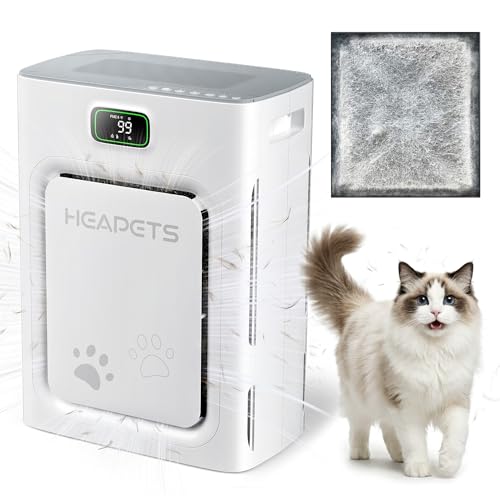
The HEAPETS P358 is designed for pet owners seeking fast air purification in large spaces. It features a U-shape air inlet to prevent hair from clogging the system and uses a dual-sided design to pull air from both sides. This model combines an H13 HEPA filter with activated carbon to reduce common pet odors, including litter odors, and to capture smoke, dust, and dander. It’s best for households with multiple rooms requiring high CADR and quick turnover. A potential limitation is the need for regular filter maintenance due to pet hair exposure.
Best for: Homes with pets, large living rooms, bedrooms, or open-plan spaces up to 2500 ft². Choose this if you want rapid purification and strong odor control for pet-related smells.
Ladnut Cat Litter Odor Deodorizer

This device uses a dual-action approach by combining ozone and negative ion technology to break down ammonia and trap airborne particles. It also includes a smart sensor to automatically activate when the litter box is approached, reducing odor without constant manual control. Three modes offer flexible odor management, from gentle continuous ionization to automated cycling. Do not rely on it in spaces where ozone safety is a concern for occupants sensitive to ozone exposure; the device is designed to manage odors at the source with minimal user input.
Best for: Busy households that want automatic litter-box odor control with minimal intervention. Avoid in spaces where occupants are sensitive to ozone or where pets have respiratory vulnerabilities.
uahpet Nano Deodorizer For Litter Box

The uahpet device uses a nano-tech deodorizer to target ammonia and litter box odors without emitting ozone. It plugs in with a 5-foot cord, allowing flexible placement around the litter area. The design emphasizes low maintenance and consistent, quiet operation. This option is best for users who want a plug-in solution with zero ozone emissions and a long-term, set-it-and-forget-it approach. A limitation is that it relies on adjacent placement for maximum effectiveness rather than treating the entire room.
Best for: Cat owners seeking a safe, ozone-free alternative near the litter box. Choose this if you want a low-maintenance unit with continuous, source-focused odor reduction.
Purrified Air Litter Box Odor Purifier

This product is engineered specifically for litter box odor control across multiple litter box styles. It uses a substantial amount of activated carbon, zeolite, and VOC filters to aggressively reduce ammonia and other litter-related smells. The filter media and coating aim to trap dust and dander, offering longer-lasting odor control compared with basic carbon filters. A potential limitation is the need for proper mounting or placement to maximize airflow into the litter area.
Best for: Litter box-heavy households needing strong, long-lasting odor adsorption. Choose this when odor control near the litter box is the main goal and universal compatibility matters.
TDBYWAE True HEPA Air Purifier

The TDBYWAE purifier is a three-stage filter system designed to target dust, pollen, smoke, and pet dander. It advertises a 600 ft² maximum coverage and a quiet operation profile, making it versatile for bedrooms and living rooms where litter odors may drift. The upgraded filter media improves air turnover and odor control while maintaining a low noise level for nighttime use. A caution is that actual performance depends on room layout and how often filters are replaced.
Best for: Couples or small families needing an effective all-round purifier for rooms up to 600 ft². Choose this if you want true HEPA filtration with added activated carbon for odors and a quiet profile.
Buying Guide: Key Considerations For Cat Litter Odor Control
- Room size and layout: Select an air purifier with CADR suitable for your largest room or the entire living area your cat uses.
- Odor vs. particle removal: Some devices focus on odors near the litter box, while others target broader air particulates like dander, dust, and pollen.
- Filter maintenance: Consider filter lifespan, replacement cost, and whether the unit uses washable or replaceable filters.
- Ozone safety: Prefer devices with zero ozone emission for households with pets and sensitive occupants.
- Placement strategy: For best results, position purifiers so that intake air reaches the litter box area and avoid blocked airflow.
FAQ: Cat Litter Odor And Air Purifier Queries
Do I need a purifier if I use a covered litter box?
Yes, odors can escape through vents or imperfect seals, and purifiers help remove scent molecules and dander in the surrounding room.
Which feature matters most for litter odors?
A combination of robust activated carbon filtration and an efficient airflow system that can reach the litter box area quickly.
Is ozone-based technology safe around cats?
Ozone-based devices can pose health risks with prolonged exposure. Choose ozone-free models to ensure safe use near pets.
How often should filters be replaced?
Replacement frequency depends on usage, pet count, and air quality, but many purifiers require a filter change every 6–12 months with typical household use.
Can I use multiple devices together?
Yes, one near the litter box and another in the main living area can improve overall air quality, especially in larger homes.