Best Egg Trays for Incubator: Top Picks for Reliable Hatch Prep
Finding the right egg trays for incubators is essential for safe handling, organized storage, and stable incubation conditions. This guide highlights five top options suited for hobbyists and small to mid-size breeders. Each choice is evaluated for capacity, compatibility, and practical limits, helping you pick trays that fit your incubator and egg types.
Buyer types:
– Small hobbyists: compact, versatile trays with good egg protection.
– Breeders with mixed species: higher capacity and adaptable layouts.
– Home farmers: durable, reusable trays for regular use and easy stacking.
| Product | Best For | Capacity | Material | Why It Stands Out |
|---|---|---|---|---|
| Universal Chicken Egg Trays (6 pack) – GQF | General poultry | Up to 48 per tray | Plastic | High capacity and broad compatibility with common egg sizes |
| LOYORTY 12PCS Plastic Egg Trays | Display and selling eggs | 30 per tray | PE plastic | Durable, stackable, protects eggs from movement |
| Teenyyou 10 Pcs 90 Egg Trays | Breeders with many eggs | 90 per tray (each tray) | Plastic | Very high capacity for larger projects |
| GQF Large Egg Setting Tray | GQF cabinet users | 162 eggs total (6 racks) | Plastic | Designed for specific cabinet incubators, stable layout |
| 15-Pack Reusable Plastic Egg Tray – QPWWGH | Home farmers, organization | 30 per tray | PP plastic | Four color codes for size or batch separation; sturdy and reusable |
Universal Chicken Egg Trays (6 pack) – GQF
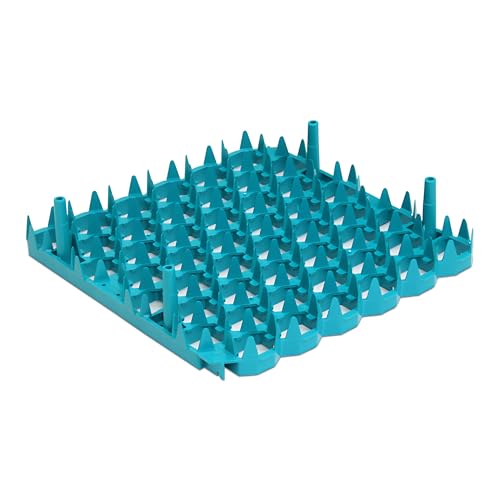
These trays hold up to 48 eggs per tray, suitable for chicken, gamebird, mallard, guinea, bantam, and other standard egg sizes. Best for growers needing substantial capacity in a single tray. The durable plastic construction supports repeated use, and the large size makes arranging eggs efficient. Caution: verify compatibility with your incubator rack spacing to ensure a secure fit.
LOYORTY 12PCS Plastic Egg Trays

High-quality PE plastic trays, stackable and reusable, each holding 30 eggs. Groove design reduces movement to protect eggs during transport and display. Best for sellers and markets that rotate lots of eggs weekly. Limitations: plastic trays can be bulkier to store when not in use, and care is required to prevent warping with heavy loads.
Teenyyou 10 Pcs 90 Egg Plastic Trays

Each package includes 10 trays, each designed to hold 90 eggs for quail, pigeons, doves, or other birds. Ideal for breeders handling diverse species or large-scale incubation planning. Best for maximizing space in storage or transport. Caution: designed more for specialty birds; verify egg size compatibility with your incubator racks.
GQF Large Egg Setting Tray

Compatible with GQF cabinet incubators, this tray supports a total capacity of up to 162 eggs across six racks. Durable plastic construction ensures long-term use in busy incubator setups. Best for users with established GQF systems seeking reliable hatch conditions. Limitation: designed for specific cabinet formats, not universal for all incubators.
15-Pack Reusable Plastic Egg Tray – QPWWGH

This set provides multiple 30-egg flats with color-coding to help distinguish egg sizes or production times. The PP plastic is durable, stackable, and reusable, making it well-suited for home farmers organizing daily production. Better for smaller operations needing modular handling; avoid if you require extremely large trays per insert in a single rack.
Buying Guide
Key considerations when choosing egg trays for incubators:
- Egg capacity per tray: Match tray capacity to your flock size and incubator rack layout.
- Species compatibility: Some trays are optimized for chicken eggs, others for quail or pheasants. Check egg hole sizing and spacing.
- Material and durability: Plastic trays offer durability and reuse; check for flexibility to avoid cracking during handling.
- Rack compatibility: Ensure tray dimensions align with your incubator’s racks or cabinet layout.
- Stackability and nesting: If space is limited, look for trays designed to nest when not in use.
- Color-coding options: Color variants help separate egg sizes or production times for better organization.
Practical comparison questions
- Which tray offers the best overall capacity for a mixed-species operation? Consider the GQF Large Egg Setting Tray for cabinet setups or the high-capacity Teenyyou options if you primarily handle many eggs at once.
- Is universal compatibility important? The Universal Chicken Egg Trays provide broad sizing compatibility, but verify your incubator’s rack spacing.
- Do you need reusable solutions? All listed options are reusable, but PP and PE plastics vary in flexibility and cleaning needs.
- Do you sell eggs in markets? The LOYORTY or QPWWGH trays with stacking and color-coding can simplify display and sorting for buyers.
FAQ
- What capacity is typical for a single tray? Capacity varies by model; some hold 30 eggs, others up to 90 or 162 across multiple racks. Check per-tray numbers and rack design.
- Are these trays suitable for all incubator brands? Many are designed for common incubator formats, but always confirm rack spacing and tray size with your specific unit.
- Can trays be washed and reused? Yes, most are reusable; use mild cleaning to preserve plastic integrity.
- How do I prevent egg damage during transport? Look for grooves and separators that minimize movement and absorb shock during handling.
- Should I color-code my trays? Color-coding helps with quick visual sorting by size or production batch, especially in busy operations.
- Are there trays best for quail or pheasant eggs? Some trays sized for larger eggs may not fit smaller eggs well; pick trays with appropriately spaced holes for your species.