Best Electric Metal Shears for Quick, Clean Cuts in the Workshop
Electric metal shears speed up sheet metal work with consistent cuts and minimal effort. This guide highlights five top options across professional and DIY use, focusing on versatility, durability, and ease of operation. Each reviewed model offers a swivel head or cordless capability to reach tough angles, making them suitable for HVAC, automotive, or metal fabrication tasks. The selections below balance power, control, and value to help you pick a tool that fits your typical materials and projects.
| Product | Brand | Key Benefit |
|---|---|---|
| WEN Metal Shear, 3650 | WEN | Lightweight, high-speed cuts |
| DEWALT Metal Shear DW890 | DEWALT | 360° swivel head, strong motor |
| SHALL Electric Metal Cutting Shear | SHALL | Double-cut, versatile angles |
| Wild Edge Electric Metal Shear | Wild Edge | Heavy-duty 5.0 A, large range |
| Eastwood Electric Throatless Shear | Eastwood | Throatless for complex curves |
WEN Metal Shear 3650: Swift, Light, Flexible
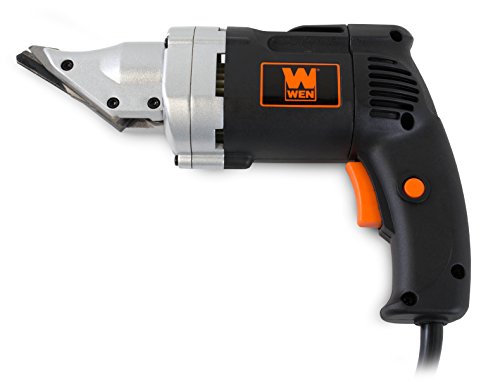
The WEN 3650 operates with a 4-amp motor and a pressure-sensitive trigger that delivers 0 to 2500 SPM. It can attack up to 20-gauge stainless steel and 18-gauge sheet metal, providing strong cutting capacity for common HVAC and automotive tasks. The tool’s lightweight design reduces operator fatigue during extended sessions, improving control on straight lines and curves. With its swivel head functionality, users can access tight spaces and awkward angles without sacrificing accuracy. This model is suited for DIYers and professionals seeking a balance of speed and maneuverability.
DEWALT Metal Shear DW890: Rugged, Versatile Cutting

The DEWALT DW890 features a 5-amp motor with ball bearings designed for long life. Its head swivels 360 degrees, enabling flexible cutting angles and improved line visibility. The tool can cut through up to 7/32-inch strips, helping keep the cutting line clear as material curls out of view. This design supports operations from straight cuts to complex shapes, making it a strong option for metal fabrication and remodeling tasks. The combination of power, reach, and durability positions it as a core choice for frequent metal cutting work.
SHALL Electric Metal Cutting Shear: Precision Curves

The SHALL shear provides a 4.0-amp motor with a 360-degree swivel head for easy positioning. It emphasizes clean, precision cuts with a double-cut blade design that yields a curled 1/4-inch waste strip, reducing airborne particulates and finish work. Users report smooth performance on 14-gauge sheet metal and 16-gauge stainless steel, with fast cutting speeds up to 2500 SPM. Its flexibility for curves and straight lines makes it suitable for varied sheet metal tasks, from duct work to flashing and panel work.
Wild Edge Electric Metal Shear: Heavy-Duty Mobility

The Wild Edge model brings a 5.0-amp motor and a full 360° swiveling head to the table. It can cut up to 14-gauge steel and 15-gauge stainless, handling a broad range of materials for roofing, flashing, and metal fabrication projects. The variable speed control (0-2700 SPM) lets users fine-tune performance from delicate to aggressive cuts, depending on material thickness and desired finish. The combination of torque, speed, and maneuverability makes it a practical choice for professional shops and skilled DIYers tackling larger jobs.
Eastwood Throatless Shear: Curves Without Limits

Eastwood’s throatless shear is designed to cut 18-gauge steel, 22-gauge stainless, and 16-gauge aluminum. It features a high-performance motor and a tungsten carbide blade for longer life in demanding work. The tool’s fan-cooled motor and ball bearings support consistent cutting over extended sessions, while replaceable brushes simplify maintenance. This model excels in projects requiring curved or intricate cuts, such as custom panels or complex duct shapes. It offers reliable control for metal fabricators prioritizing precision over sheer raw speed.
Buying Guide
- Material compatibility: Check the maximum thickness and metal types each shear can cut (stainless steel, aluminum, mild steel) to ensure it matches your typical projects.
- Head design and maneuverability: A 360° swivel head aids access to tight spaces and curved cuts; throatless or large-radius designs enhance curve work.
- Power and speed: Amperage and SPM affect cutting speed and capability on thicker materials. Higher amperage generally handles heavier tasks but adds weight.
- Corded vs cordless: Corded tools provide consistent power; cordless models add portability but require battery management and torque considerations.
- Durability and maintenance: Look for ball bearings, fan-cooled motors, replaceable brushes, and robust housings to minimize downtime.
- Operator safety and control: Features like safety locks, soft-start triggers, and stable handles improve accuracy and reduce fatigue.
- Budget vs value: Higher-end models offer more torque and durability, but for occasional use, mid-range tools can offer solid performance at a better price.
When selecting among these options, align the tool’s strengths with your typical cuts, material thickness, and your comfort with speed versus control. Swivel-head models excel in flexible layouts, while throatless and double-cut designs support complex shapes with cleaner finishes. Corded tools deliver steady performance for long sessions, whereas cordless options boost portability for remote sites or crowded workspaces. Across the board, prioritize a tool with a comfortable grip, reliable blade life, and easy maintenance to ensure longevity in daily use.