Best Exterior Stain for Pine: Top Picks for Lasting Color and Protection
Choosing the right exterior stain for pine involves balancing color, protection, ease of application, and maintenance. Pine is a softwood that accepts stain more readily than some species, but it also wears differently under sun and moisture. This guide highlights five top exterior stains that perform well on pine, offering a mix of natural pine hues and deeper tones to protect against UV damage, moisture, and fading. Each option emphasizes ease of application, durability, and long-term color retention.
| Product | Brand | Finish / Color | Key Benefit |
|---|---|---|---|
| Ready Seal 510 Exterior Stain and Sealer | Ready Seal | Golden Pine | No primer needed; easy spray, brush, or roller application |
| Varathane Total Control Gel Stain Water-Based | Varathane | Ipswich Pine | Thick gel formula; low odor; fast dry |
| Ready Seal 512 Exterior Stain and Sealer | Ready Seal | Natural Cedar | No back brushing; streak-free finish |
| DEFY Ultra Semi-Transparent Outdoor Stain | DEFY | Natural Pine | One-coat or two-coat system; long-lasting protection |
| Minwax Ipswich Pine Wood Finish | Minwax | Ipswich Pine | Deep color with fast drying; enhances natural grain |
The following sections summarize five selected exterior stains that suit pine surfaces, with practical details drawn from the product features to help you compare at a glance and choose confidently for your project.
Ready Seal 510 Exterior Stain And Sealer For Wood

Ready Seal 510 is formulated to deliver color and protection without requiring a primer, which is advantageous for pine decks, fences, and siding. The brand notes that the stain appears darkest at first application and evolves to its true color over roughly two weeks, making it suitable for projects where you want a deep pine tone gradually settling. It can be applied with a sprayer, roller, or brush, and it minimizes runs, laps, or streaks without back-brushing. Since pine fibers can swell with moisture, the product’s sealed surface helps resist moisture intrusion after curing. This option is especially helpful for exterior projects where quick coverage and user-friendly application are priorities. It’s not recommended for painted or freshly stained surfaces, and surface integrity is important to ensure penetration and performance.
Key points: no primer required, versatile application methods, color develops over two weeks, and a streak-free finish when properly applied. The darkest color on first pass can be a consideration for color planning, especially if you want a lighter final appearance after curing.
Varathane Total Control Gel Stain Water-Based Ipswich Pine

Varathane Gel Stain offers a thick, no-drip gel formula designed for precise control on both vertical and horizontal surfaces, making it suitable for pine fences, doors, and trim. The water-based gel stain is low odor and engineered to minimize mess, which is beneficial for indoor near-pine furniture or covered exterior areas that require less fragrance exposure. The product dries quickly—about one hour on wood—allowing faster project completion. While gel stains enhance color depth on pine, users should expect the Ipswich Pine shade to highlight the wood grain while providing protective color. The gel consistency helps reduce streaks and drips, especially on vertical surfaces where gravity can cause runs, laps, or uneven finishes.
Pros include ease of application, relatively low odor, and fast drying, which is helpful for homeowners tackling large pine surfaces in moderate climates. A potential trade-off is the gel finish’s coating thickness, which may affect the final sheen depending on the number of coats and light exposure.
Ready Seal 512 5-Gallon Pail Natural Cedar Exterior Stain
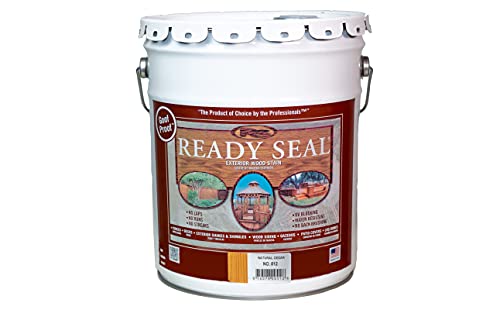
Ready Seal 512 provides a natural cedar tone with the same primer-free, streak-free performance typical of Ready Seal products. It emphasizes easy application with sprayer, roller, or brush and promises a finish without back brushing. The color typically deepens after initial application and can be beneficial for pine structures where a natural, weathered look is desired. Like the 510 variant, it is best used on non-painted surfaces and on surfaces where the stain can properly penetrate the wood. The cedar color palette can complement pine’s natural hues while providing UV protection against graying and moisture damage. This option is well-suited for exterior projects that require a straightforward, low-maintenance finish over pine wood.
Notable considerations include color development over time and adherence to surface prep guidelines to prevent peeling or uneven absorption. For large areas, the 5-gallon size offers economical coverage and consistency across expansive pine installations.
DEFY Ultra Semi-Transparent Outdoor Wood Stain – Natural Pine

DEFY Ultra combines stain and sealer, offering semi-transparent color that preserves natural grain visibility while providing weather protection for pine. The product supports a flexible one-coat or two-coat system, depending on the desired depth of color and sheen. Natural Pine shade is designed to enhance pine’s warm tones while offering good UV resistance and moisture protection. It’s formulated for outdoor wood and is suitable for decks, fences, siding, porches, and play structures, which makes it a versatile choice for pine surfaces exposed to sun and rain. Easy application is emphasized, with compatibility for spray, brush, or roller application and straightforward maintenance.
Potential considerations include selecting the number of coats to achieve the desired color depth and sheen. For high-traffic outdoor areas or regions with harsh weather, a two-coat approach may yield longer-lasting color and protection.
Minwax Ipswich Pine Wood Finish

Minwax Wood Finish is an oil-based stain designed to deeply penetrate pine pores, delivering rich color and enhanced grain in a single coat. It dries relatively quickly for interior projects but also offers exterior-grade applications where appropriate. The Ipswich Pine shade is a classic option for achieving a traditional pine look while adding a protective layer against moisture and UV exposure. The product’s oil-base helps with penetration and depth of color, and it dries within a modest timeframe, enabling multiple coats if deeper color is desired. For pine, this stain is particularly suitable when you want a robust, durable finish that emphasizes the wood’s natural texture.
Application tips include applying with a clean cloth or brush along the grain, waiting a short period, and wiping to control color depth. Reapplication intervals depend on weather conditions and wear, but this option offers proven performance for pine projects needing a classic wood-toned appearance.
Buying Guide: Key Purchase Considerations For Pine
When selecting an exterior stain for pine, consider these factors to ensure durable protection and a color that aligns with your vision:
- Wood condition and surface prep: Pine absorbs stain differently based on prior finishes and surface texture. Clean, dry, and lightly sanded surfaces yield the best penetration and uniform color.
- Color depth and grain visibility: Pine responds well to semi-transparent and gel stains that show grain. If you want a wash of color without hiding grain, choose semi-transparent formulas; for richer color, opt for deeper stains or multiple coats.
- Protection level: Look for UV blockers, mildew resistance, and moisture protection. For outdoor pine exposed to sun, rain, and temperature swings, a stain with protective sealant or a combined stain-sealer product can provide longer intervals between reapplications.
- Application method: Sprayers, brushes, and rollers each have pros. Sprayers cover large areas quickly; brushes are better for precise edges; rollers offer easy application on flat surfaces. Gel stains reduce runs on vertical surfaces but require adequate drying time between coats.
- Drying and recoat times: Quick-dry formulas help complete projects sooner, but ensure adequate curing before weather exposure. Gel stains typically dry slower but provide control over drips.
- Color retention and aging: Some stains darken as they cure. Plan color expectations accordingly to avoid surprises after the color settles.
- Volume and coverage: For fences, decks, and siding, calculate square footage to choose the appropriate container size. Larger volumes may offer better uniformity across a project.
- Maintenance cycle: Exterior pine finishes typically require maintenance every few years, depending on climate and wear. Consider ease of reapplication and surface compatibility when budgeting time and effort.
- Environmental and odor considerations: Water-based gels tend to have lower odor and easier cleanup, which can be important for projects near living spaces.
In summary, the best exterior stain for pine balances color, protection, and ease of application. Ready Seal options provide primer-free ease and streak-free finishes, while Varathane and Minwax offer deeper color and grain-enhancing results. DEFY Ultra and DEFY Extreme provide flexible single- or multi-coat options with strong UV and moisture resistance, suitable for pine surfaces exposed to outdoor conditions. Consider your climate, surface condition, and preferred color depth to pick the stain that best fits your pine project.