Best Sliding Miter Saws for Precise, Quick Crosscuts
Sliding miter saws deliver versatile cutting power for woodworking, remodeling, and construction projects. The right model combines a robust motor, smooth sliding rails, accurate miter and bevel settings, and helpful features like laser guides or detent stops. This guide highlights five top options to consider, with a quick reference table and practical buying tips to help you pick the best sliding miter saw for your shop.
| Brand | Model | Key Benefit |
|---|---|---|
| DEWALT | DWS779 (12″ Double Bevel Sliding Compound) | Increased crosscut capacity and precise miter system |
| Skil | MS6305-00 (10″) | Compact 10″ with dual bevel and strong RPM |
| DOVAMAN | 12-Inch Dual-Bevel Sliding | Ambidextrous design and laser guide |
| DEWALT | DWS780 (12″ Double Bevel) | Integrated cutline system for visibility |
| Metabo HPT | C12RSH3 (12″) | Xact Cut Shadow Line for accurate cuts |
DEWALT Miter Saw, 12 Inch Double Bevel Sliding Compound

The DEWALT DWS779 is a 12-inch sliding compound miter saw with a robust 3800 RPM motor and a dual-bevel mechanism. Its stainless steel miter detent plate includes 10 positive stops, assisting quick, repeatable angles. A precise miter system and machined base fence support improve overall accuracy, while a cam-lock miter handle with detent override speeds up angle changes. This model emphasizes capacity and stability for long, demanding cuts in framing, trim work, and molding projects. The saw’s build quality supports repeatable performance in professional settings, making it a strong choice for carpenters and serious DIYers seeking dependable results.
SKIL 10″ Dual Bevel Sliding Compound Miter Saw MS6305-00
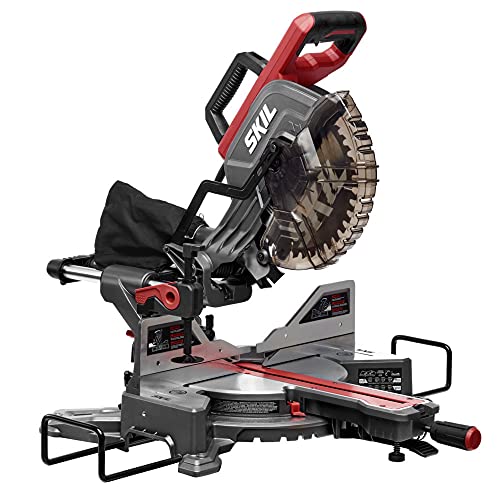
The SKIL MS6305-00 offers a 10-inch blade with a powerful 15-amp motor delivering up to 4800 RPM for rapid, detailed cuts. It features a dual bevel with four positive stop positions at 48° and 45° left, as well as 0° and 45° right, enabling flexible angle work for trim and cabinet projects. The LED shadow line enhances cut accuracy by projecting the saw’s kerf onto the workpiece, providing a precise visual guide ahead of each cut. This model is a practical option for users who need reliable, fast performance in a compact footprint.
DOVAMAN 12-Inch Dual-Bevel Miter Saw

The DOVAMAN 12-inch dual-bevel miter saw emphasizes ambidextrous operation with a 3800 RPM motor and a 4.2 x 13-inch cutting capacity. It includes a laser guide for precise alignment and features nine positive stops for convenient repeatable angles. The saw supports 0–45° bevel and 0–45° miter cuts, allowing accurate crosscuts on a range of materials. Its design focuses on versatility and accuracy, making it suitable for detailed woodworking, cabinetry, and framing tasks.
DEWALT Double Bevel Sliding Miter Saw, 12-Inch (DWS780)

The DEWALT DWS780 is a 12-inch double bevel sliding miter saw designed for heavy-duty applications. It features a sizable 1100-watt motor and an integrated cutline blade positioning system, offering adjusted cutline visibility for accuracy without requiring constant alignment checks. The system helps maintain precise results on complex cuts and long runs, making it a staple for professionals who require dependable accuracy in consistent, repeated work.
Metabo HPT 12-Inch Dual Bevel Sliding Miter Saw (C12RSH3)

The Metabo HPT C12RSH3 delivers high performance with a no-load speed up to 4000 RPM and bevel angles from 45° left to right, plus 9 detent stops for quick setup. Its Xact Cut Shadow Line provides a clear cut line visualization, improving accuracy in various lighting conditions. The miter angle range and solid construction make it suitable for tasks ranging from framing to fine trim work, offering a balance between power, precision, and dependable operation on the job site.
Buying Guide: Key Purchase Considerations
- Cutting capacity: Consider the maximum crosscut size and whether you need larger capacity for framing or large trim pieces. Sliding rails extend vertical reach and improve throughput on wide boards.
- Bevel and miter range: A wider bevel range (commonly 0–45° left and right) and multiple miter detents simplify complex cuts and repetitive tasks.
- Motor power and speed: Higher RPM and a robust motor reduce bogging down with hardwoods and thicker stock, improving cut quality and efficiency.
- Accuracy aids: Look for detent stops, laser guides or shadow lines, and a strong fence system to ensure precise alignment and repeatable results.
- Ease of use and ergonomics: Features such as cam-lock handles, easy depth adjustments, and ambidextrous operation can reduce user fatigue during long sessions.
- Dust control and maintenance: Efficient dust collection and accessible blade access help maintain performance and extend tool life.
- Portability vs. stability: Weigh options between lighter, compact models for small workshops and heavier, pro-grade units for heavy usage.
- Warranty and service: A reliable warranty and accessible support can be important for professional settings where downtime is costly.
Usage Scenarios And Performance Outlook
For framing and large-dimensional cuts, models with higher crosscut capacity and robust motors (such as DEWALT and Metabo HPT offerings) provide dependable performance under demanding workloads. For trim work and cabinetry, precise alignment aids like laser guides or shadow lines, along with clear cut line indicators, help achieve clean, accurate finishes. Ambidextrous designs are advantageous in studios or shops where both left- and right-handed users operate the saw. When selecting, weigh the balance between capacity, accuracy aids, and ease of use to match your typical projects.
Maintenance And Safety Tips
- Regularly clean the miter saw rails and fence to ensure smooth sliding action.
- Inspect detent springs and knobs for wear; replace if you notice drift in angles.
- Keep the laser or shadow line calibrated according to manufacturer guidance for consistent accuracy.
- Always use appropriate PPE, secure clamping for workpieces, and support long boards to prevent kickback.
Choosing the right sliding miter saw depends on your typical materials, project scale, and required precision. The models listed above cover a range of capacities and features, helping you align performance with your budget and workflow. Use the buying guide as a framework to compare tools and build confidence in your final choice.