Best Underlayment for Tile Roof: Top Membranes for Durable, Crack-Free Installations
Choosing the right underlayment is essential for tile roof performance, especially around water intrusion, substrate movement, and long-term durability. This guide highlights five top underlayments that balance strength, moisture protection, and ease of installation. Each product below features materials and claims suitable for tile roof applications, with a practical buying guide to help compare options.
Quick comparison
| Product | Brand | Key Benefit | Coverage |
|---|---|---|---|
| SIPA 100 GSM Synthetic Waterproof Roof Underlayment | SIPA | High tear resistance; UV exposure up to 60 days | 1,000 sq ft |
| Tyvek Protec 120 Roof Underlayment | Tyvek | Class-compatible wrap with durable, breathable layer | 1 roll (4′ x 250′) |
| Tyvek Protec 200 Roof Underlayment | Tyvek | Class A fire rating; long-term code approvals | 1 roll (4′ x 250′) |
| DuPont Roof Protector Roofing Underlayment Roll | DuPont | Four-layer construction; strong grip and moisture barrier | 42″ x 286′ |
| Pangda Waterproof Membrane Roll | Pangda | Large coverage; flexible and cut-to-fit | 3.94 ft x 114.8 ft (452 sq ft) |
SIPA 100 GSM Synthetic Roof Underlayment

The SIPA underlayment offers a robust synthetic membrane designed for roof decks beneath tile. With 100 GSM weight, it provides substantial tear resistance and a built-in UV exposure tolerance of up to 60 days, allowing for temporary sun exposure during installation. It lists performance validations including ASTM D4869 and ASTM D226 compliance, plus CCRR and FBC approvals. The roll covers up to 1,000 square feet, enabling fewer seams on medium-to-large roof projects. Consider this option when you need dependable moisture protection paired with UV endurance for longer install windows.
Houseables Uncoupling Membrane for Tile

This uncoupling membrane serves as a decoupling layer between substrate and tile, reducing crack transmission from substrate movement to the tile surface. It’s installed by applying thin-set to the substrate, laying the membrane, and continuing with tile installation. The membrane adds minimal thickness and provides antifracture protection to adapt to substrate expansion and contraction, helping to prevent tile cracking and spiderweb cracks that commonly appear with temperature and moisture fluctuations.
Tyvek Protec 120 Roof Underlayment
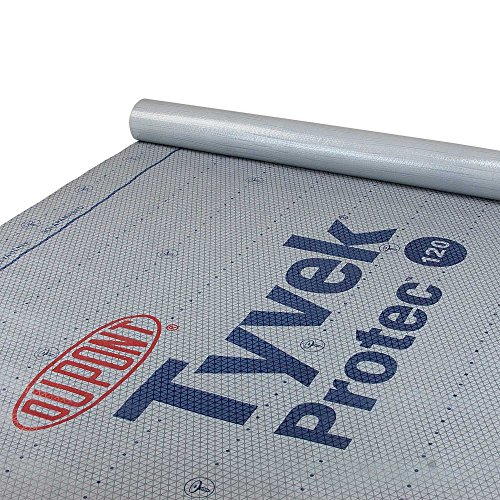
Tyvek Protec 120 is a versatile roof underlayment designed for both new construction and re-roofing projects. It is compatible with asphalt, cedar, and metal roofs, and is produced by DuPont Tyvek, a brand known for durable building wraps. The product emphasizes protection against moisture while offering reliable performance under various roofing materials. It’s well-suited for projects seeking a balance between ease of installation and dependable secondary moisture protection, with a focus on staying durable under typical roof deck conditions.
Tyvek Protec 200 Roof Underlayment

Tyvek Protec 200 offers a higher-grade underlayment option with a Class A fire rating per ASTM E110 and a durable profile backed by ICC-ES AC188 approval. It also carries a long-term warranty (up to 50 years replacement in some coverage scenarios) and Miami-Dade County approval, making it a strong choice for regions with stringent building codes and higher moisture risk. This product prioritizes fire performance alongside moisture protection for tiled roofs.
DuPont Roof Protector Underlayment
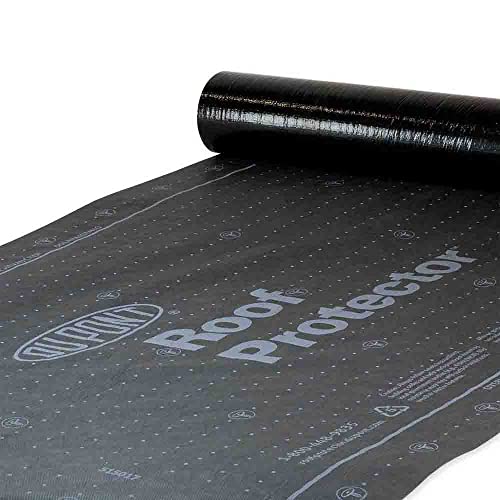
DuPont Roof Protector features a four-layer construction designed for enhanced grip, water barrier performance, and roof deck protection during installation. The top layer provides improved traction for workers on the roof, while the lamination layer and woven scrim work together to block moisture. The combination aims to reduce deck damage and improve overall durability of tiled roof installations, especially in challenging weather during and after application.
Pangda 3.94 ft x 114.8 ft Waterproof Membrane

The Pangda membrane covers a substantial area per roll, reducing seams for larger tiling projects. It’s made from density polyethylene, which emphasizes durability, tear resistance, and flexibility. The product is easily cut to fit and is suitable for showers, bathrooms, and roof applications where a waterproof barrier is needed. This membrane is designed to withstand moisture and provide a dependable base for tile installations in varied environments.
MAXKOSKO 54 Sq Ft Uncoupling Membrane

MAXKOSKO offers a 54 sq ft uncoupling membrane with a 1/8-inch (3 mm) thickness, suitable for heated floors and other tile installations. The HDPE-based design focuses on decoupling to prevent cracking, while providing a pathway for moisture drainage to prevent hydrostatic pressure buildup. It’s dimensionally versatile and can be cut to fit irregular spaces, making it a practical option for smaller or detailed tile layouts, including recreational rooms and bathrooms with radiant heating.
Buying Guide: Key Purchase Considerations
- Moisture protection vs. movement control: For tile roofs, prioritize products that provide a robust moisture barrier and good substrate movement tolerance to prevent cracks in tiles and the substrate beneath.
- Compatibility with roof type: Consider underlayments that advertise compatibility with common roofing materials (asphalt, cedar, metal) and roof configurations, especially if you are re-roofing a tile deck.
- Fire rating and code approvals: In some regions, higher fire resistance and official code approvals (such as Class A ratings and Miami-Dade approvals) are important for compliance and insurance considerations.
- UV exposure tolerance: If installation timelines require sun exposure before covering the underlayment, choose products that tolerate UV exposure for a defined period without degradation.
- Thickness, weight, and installation ease: Heavier, thicker membranes may offer more protection but can be harder to handle. Look for membranes that balance ease of installation with performance.
- Warranty and long-term performance: Some brands offer extended warranties or replacement terms. Weigh these against project duration and climate risk.
- Seam reduction and coverage area: Larger rolls reduce seams and labor for big roofs; verify roll dimensions to match your project size.
- Uncoupling vs. waterproofing: If your primary concern is tile cracking due to substrate movement, uncoupling membranes are preferred. For moisture protection directly under tiles, waterproof underlayments may be better.